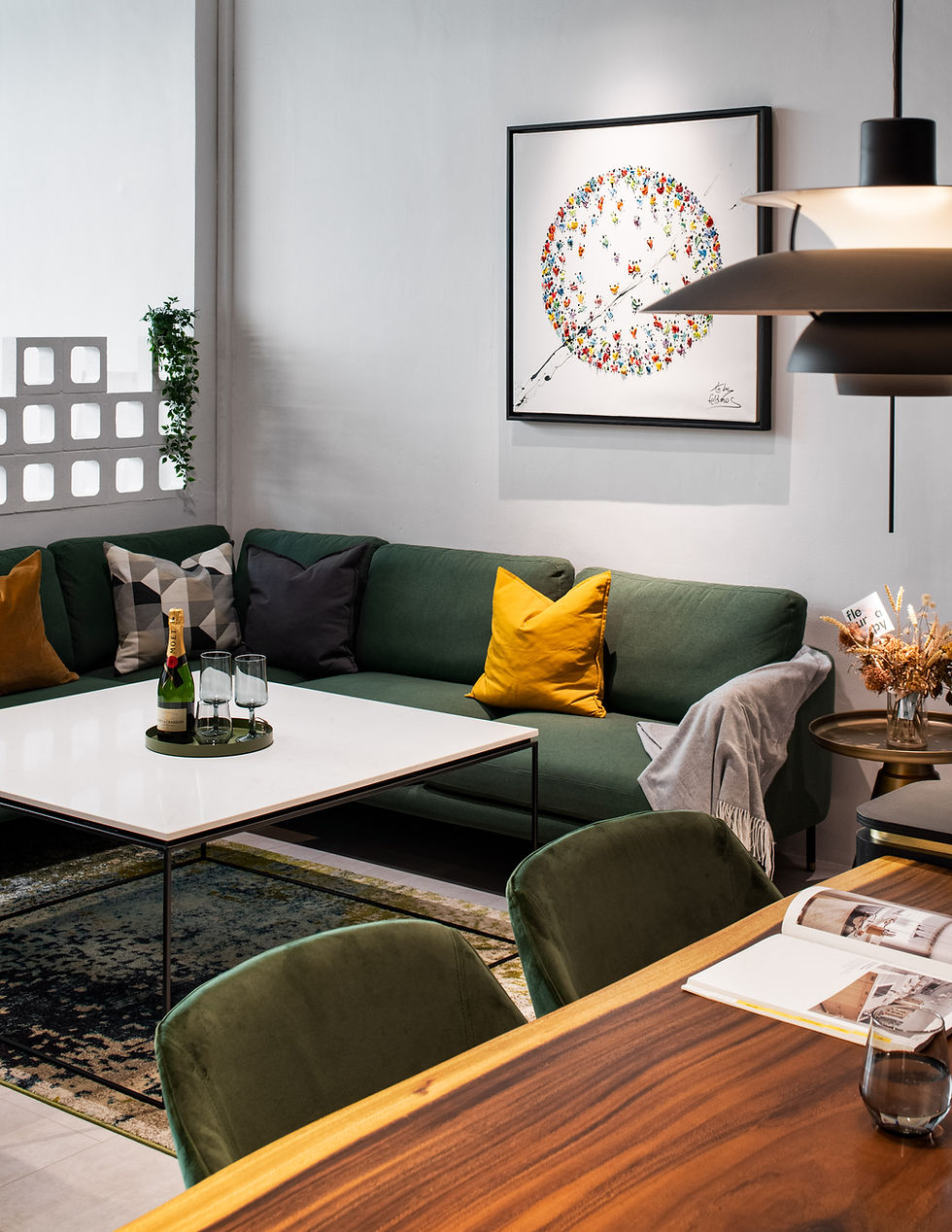
The New Luxury: Why Singapore Homes Are Embracing Warmer, More Personal Interiors

For a long time, luxury interiors were easy to recognise.
Polished marble. Glossy surfaces. Dramatic feature walls. Oversized lighting. Statement furniture designed to make an immediate impression.
But the mood is changing.
Across contemporary residential interiors, luxury is becoming quieter, warmer and considerably more personal. Timber is replacing some of the colder surfaces once associated with high-end homes. Lighting is becoming softer. Natural materials are being layered rather than displayed individually. And instead of designing a home to look impressive at first glance, more homeowners are creating spaces that reveal themselves gradually.
In Singapore, this shift is particularly interesting.
With condominium living becoming increasingly design-conscious, homeowners are looking beyond simply maximising space or following the latest interior trend. They are asking for homes that feel more considered, spaces that reflect how they live, what they collect and what they value.
For IDesignerLab, this evolution represents a more nuanced interpretation of modern luxury interior design Singapore.
Luxury does not necessarily have to announce itself. Sometimes, it is felt rather than seen.
Luxury Is Getting Quieter
The idea of luxury has changed considerably over the past decade.
There was a time when a high-end home was often defined by visual abundance. More stone, more decorative detailing, more dramatic finishes.
Today, restraint can be just as powerful.
A carefully selected stone surface.
A wall of warm timber.
A sculptural piece of furniture.
Soft curtains filtering daylight.
Concealed storage that allows the architecture to remain visually calm.
None of these elements needs to compete for attention.
Instead, they work together.
This approach is particularly suited to contemporary Singapore homes, where homeowners often want a refined interior without sacrificing warmth or everyday comfort.
The result is a version of luxury that feels less like a showroom and more like a home.
For an interior design Singapore studio working with homeowners who have increasingly individual tastes, this also means moving away from a single definition of what a "luxury home" should look like.
The materials may be premium.
The craftsmanship may be meticulous.
But the finished space does not need to look excessive.
Warm Timber Is Having a Moment
Among the clearest shifts in contemporary interiors is the return of warm timber.
Timber has always been a familiar material in residential design, but its role is changing.
Rather than appearing only as flooring or furniture, it is increasingly becoming part of the architecture itself.
Full-height timber panels can soften an otherwise linear interior. Timber cabinetry can bring warmth to a stone-heavy kitchen. A wood-lined wall can create a visual transition between living spaces.

In The Quiet Warmth, for example, warm timber and softened forms are used to create an interior that feels understated rather than overtly luxurious.
The material does not dominate the space.
It gives the architecture a sense of warmth.
This is one reason timber works so naturally within modern luxury interiors. It introduces texture and depth without demanding attention.
Paired with stone, neutral upholstery and carefully controlled lighting, it can create an atmosphere that feels sophisticated but still comfortable enough for everyday living.
In other words, luxury becomes something you experience rather than something you display.
From Perfectly Styled to Personally Lived-In

Perhaps the most significant change is not a material at all.
It is personality.
There is a growing desire for homes to feel less like finished showrooms and more like places that belong to the people living in them.
Books remain on shelves.
Artwork has a story.
Travel objects find their way into display niches.
Furniture is chosen not only because it photographs beautifully, but because someone genuinely enjoys sitting in it.
A collection might influence the colour palette of a room. A treasured piece of furniture might determine the proportions of an entire space.
These details make a difference because they cannot simply be copied from another project.
They belong to the homeowner.
This is where high-end interior design becomes less about replicating a particular aesthetic and more about interpretation.
A designer may begin with a reference to Japandi, contemporary minimalism or modern luxury, but the finished home should ultimately become something more personal.
The style is the starting point.
The homeowner is the story.
The Return of Tactile Materials

Another defining characteristic of the new luxury is the growing importance of texture.
Smooth marble can sit beside rougher stone. Timber can be contrasted with brushed metal.
Soft textiles can soften architectural surfaces. Plaster finishes can introduce subtle variations that become visible as light moves across the wall.
These contrasts create depth without relying on bold colours.
Natural stone remains a powerful material within luxury condo interior design, but it is increasingly being used with greater restraint.
Rather than covering every available surface, a single stone element can become a focal point. A kitchen island, a bathroom vanity or a sculptural surface within the living area.
The same principle applies to other materials.
Luxury is not necessarily about how much is used.
It is about where it matters.
This approach allows a relatively restrained material palette to feel rich without becoming visually overwhelming.
Soft Lighting, Softer Interiors

If materials establish the physical character of a home, lighting determines how that character is experienced.
The harshness of a single overhead light can flatten even the most carefully designed interior.
Instead, contemporary homes are increasingly using layers of illumination.
A concealed light can wash across a textured wall. A pendant can create intimacy above a dining table. Integrated lighting can bring depth to cabinetry. Accent lighting can quietly draw attention towards artwork or architectural details.
The effect is subtle.
And that is precisely the point.
In a modern luxury home, lighting should not necessarily announce itself.
It should shape the atmosphere.
During the day, natural light can reveal the textures and colours of the material palette. At night, warmer layers of artificial lighting can transform the same interior into something more intimate.
The home becomes different at different times of day.
That sense of change is an important part of creating an interior that feels lived in rather than staged.
Why Concealed Storage Is Becoming the New Luxury
There is another trend quietly transforming contemporary residential interiors: the disappearance of clutter.

Open-plan living has made visual continuity increasingly important, but everyday life inevitably comes with things.
Shoes. Appliances. Wires. Documents. Children's belongings. Household equipment.
The challenge is finding ways to accommodate them without allowing them to dominate the visual environment.
This has made integrated storage increasingly important in modern condo interior design Singapore projects.
Rather than adding freestanding storage after the design is complete, cabinetry can become part of the architecture.
Doors can disappear into walls.
Full-height cabinetry can combine display with concealed storage.
A passageway can become a storage wall.
A kitchen can hide appliances behind carefully considered joinery.
The result is not simply more storage.
It is a calmer visual environment.
This is particularly effective in smaller Singapore condominiums, where visual clutter can make an already compact space feel even more confined.
The luxury is in what you no longer need to see.
Is Japandi Evolving Beyond Minimalism?

Japandi has become one of the most recognisable interior styles in Singapore.
Its combination of Japanese restraint and Scandinavian warmth makes it particularly suited to condominium living, where simplicity, natural materials and thoughtful storage can create a sense of calm.
But the Singapore interpretation of Japandi is evolving.
Rather than relying purely on pale timber, neutral walls and minimal furnishings, homeowners are increasingly introducing richer materials and more sophisticated details.
Darker timber.
Natural stone.
Sculptural furniture.
Warmer lighting.
Textured surfaces.
Subtle contrasts.
The result can feel less like strict minimalism and more like a sophisticated, highly personalised home.
Projects such as The Healing Haus demonstrate how the calm principles associated with Japandi can be combined with warm materials, soft lighting and functional planning to create an interior that feels comfortable rather than austere.
This evolution reflects a broader change in residential design.
People still want simplicity.
They simply do not want simplicity to mean emptiness.
What Makes a Home Feel Expensive Without Looking Expensive?
Perhaps this is the question at the heart of the new luxury.
The answer is rarely one particular material.
It is proportion.
Consistency.
Craftsmanship.
Lighting.
The quality of transitions between materials.
The way cabinetry aligns with architecture.
The amount of visual space around a piece of furniture.
The way a room feels when natural light changes throughout the day.
These details are easy to overlook because they are not always immediately recognisable.
But they are often what separates an interior that looks decorated from one that feels considered.
In luxury interior design Singapore homes, restraint gives these details greater importance.
When there are fewer elements competing for attention, every decision becomes more visible.
The Singapore Home Is Becoming More Personal

The new luxury is not about abandoning beautiful materials or sophisticated design.
It is about using them differently.
Warm timber can soften architecture.
Stone can introduce permanence without dominating the room.
Lighting can create atmosphere rather than simply illuminate.
Storage can disappear into the background.
And personal objects can become part of the architecture rather than cluttering it.
This creates a different idea of what a luxury home can be.
It does not need to look like everyone else's version of luxury.
It can be quieter.
Warmer.
More tactile.
More personal.
For IDesignerLab, this is where modern residential design becomes particularly interesting.
Whether a project begins with the calm language of Japandi, the richer palette of modern luxury or something that sits somewhere between the two, the strongest interiors are those that eventually move beyond the label.
Because a home should not simply represent a design trend.
It should represent the people who live there.
And perhaps that is the most meaningful form of luxury today.